
Finance minister Nirmala Sitharaman on Wednesday exuded confidence that inflation would further decline and the government is on track to meet its budgetary target for deficit and said that there is no fear of stagflation in India. Replying to the debate on first batch of Supplementary Demands for Grants 2022-23 in Lok Sabha, the finance minister said inflation has come down and it is now in the tolerable band of the RBI. Inflation has been declining since April 2022 and it is declining further, she said.

Benchmark indices advanced for the second straight session on Tuesday, with the Sensex and Nifty jumping nearly 2 per cent each, mirroring a rally in global equity markets. Buying in index majors Reliance Industries and IT stocks buoyed the benchmarks. The BSE Sensex zoomed 934.23 points or 1.81 per cent to settle at 52,532.07. During the day, it rallied 1,201.56 points or 2.32 per cent to 52,799.40. The NSE Nifty climbed 288.65 points or 1.88 per cent to finish at 15,638.80.
Benchmark indices continued their downtrend on Monday, with the Sensex falling 84.88 points, tracking selling in index majors Infosys and Reliance Industries along with weak global equities. The 30-share BSE benchmark went lower by 84.88 points or 0.15 per cent to settle at 56,975.99 after recovering some lost ground during the fag-end of trade. During the day, it tanked 648.25 points or 1.13 per cent to 56,412.62. The NSE Nifty declined 33.45 points or 0.20 per cent to close at 17,069.10.
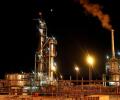
India was the world's biggest importer of Russian oil in February, exceeding China by 20 million barrels.

The Sensex finished above the psychologically key 60,000-mark while the Nifty surged past the 18,000-level on Monday on across-the-board buying amid a mixed trend overseas. A depreciating rupee and concerns over the US Federal Reserve hiking rates later this week failed to quell investors' appetite for stocks, traders said. The 30-share BSE Sensex rallied 786.74 points or 1.31 per cent to settle at 60,746.59.
Trading in other derivative products in currency, commodities expected to begin soon.
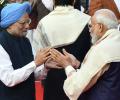
While Narendra Modi spent fewer days abroad than his predecessor -- 275 days versus Dr Singh's 306 - he has travelled more widely than any other Indian PM.

India's rupee is likely to remain under pressure due to high prices of crude oil and other commodities, and may stabilise at around 79-80 against the US dollar in the near term, say experts amid limited headroom available with the Reserve Bank to check the weakening of the domestic currency. The currency has slumped over 5 per cent this year after Russia's invasion of Ukraine sent international crude oil prices soaring to a decade high. On Monday, rupee ended at a fresh all-time low of 78.34 (provisional) against the US dollar.

While the four largest listed paint companies have seen marginal negative returns, the S&P BSE Fast Moving Consumer Goods (FMCG) and the National Stock Exchange Nifty FMCG indices have delivered a solid 16 per cent return during the same period. Initially, volume growth and reduced costs bolstered the sector's sentiment, but brokerages have grown cautious due to increased competitive pressures.
Benchmark equity indices Sensex and Nifty rallied for a third day in a row on Wednesday on buying in Reliance Industries, Infosys, HDFC twins and ICICI Bank following gains in global equities amid hopes of a breakthrough in Russia-Ukraine peace talks. The 30-share BSE barometer index surged 740.34 points or 1.28 per cent to settle at 58,683.99. During the day, it jumped 784.13 points or 1.35 per cent to 58,727.78. Similarly, the broader NSE Nifty climbed 172.95 points or 1 per cent to settle at 17,498.25. Among the 30-share pack, Bajaj Finserv, Mahindra & Mahindra, Bajaj Finance, Power Grid, HDFC, ICICI Bank, Nestle, Maruti, Reliance Industries Limited were among the lead gainers. On the other hand, ITC, Tata Steel, Tech Mahindra, Bharti Airtel and Titan were among the laggards.

His business successes which started with the international distribution rights for the Bollywood blockbuster movie 'Sangam' in 1964 made him one of the richest in Britain but it was the Bofors scam that made Srichand Parmanand Hinduja famous, or rather infamous, back home. SP Hinduja, as he was known, died in London on Wednesday after a prolonged illness. He was 87, a family spokesperson said. Born in a business family in Karachi, British India, he and his two younger brothers were accused of receiving payments totalling Rs 64 crore in illegal commissions to help Swedish gunmaker AB Bofors secure an Indian government contract.

These stocks offer the best combination of maximum 'buy' recommendations from brokerages and share price upside over the next 12 months.
The S&P BSE Sensex ended 46 points lower at 24,824 and Nifty50 settled at 7,555, down by 8 points after hitting intra-day high of 7,600.45.
Paring its early gains, benchmark BSE Sensex fell by 304 points on Wednesday as investors booked profit after recent gains amid concerns over inflation and supply constraints. Despite a firm start, the 30-share BSE barometer declined by 304.48 points or 0.53 per cent to settle at 57,684.82. During the day, it tanked 420.71 points or 0.72 per cent to 57,568.59.

'Government intervention in agricultural trade is a problem for farmers.'

BSE Midcap index outperformed the benchmark indices to end with 0.4% gains.
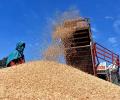
The Russia-Ukraine conflict would have nil or negligible impact on India's foreign trade, and the crisis may give domestic exporters an opportunity to ship more wheat in the global markets, sources said on Thursday. India's central pool stood at 24.2 million tonnes, twice more than the buffer and strategic needs, they said. More than a quarter of the world's wheat export comes from Russia and Ukraine.
The NSE 50-share index, after moving between 10,572.20 and 10,546.20, ended at 10,565.30, up 39.10 points, or 0.37 per cent.

Equity benchmarks continued their winning momentum for the third day on Thursday and jumped over 1.50 per cent, tracking an overall bullish trend in Asian equities. On the political front, the BJP headed for a second straight win in politically crucial Uttar Pradesh and dominated the trends chart in three other states. The 30-share BSE benchmark Sensex opened in the green and further zoomed 1,595.14 points or 2.91 per cent to 56,242.47 during early trade.

The 'BluFin Business Cycle Indicator', which reflects various macroeconomic trends on a monthly basis, stood at 166.3 points in May, 5.8 per cent higher compared to the same month last year, suggesting that the Indian economy is growing at a faster rate than the previous year.
India is looking to tap its diplomatic missions abroad to enable grain exporters in the country to ship out wheat and corn as supplies from Russia and Ukraine are expected to remain disrupted for some time to come. Between the two items, pushing for wheat is easier because of a huge domestic surplus. "We are hand holding our exporters and support from various Indian missions abroad is also being channelised accordingly," a senior government official said. Global wheat prices have jumped since the Ukraine crisis started, with wheat futures in the US reaching their highest levels since 2008.
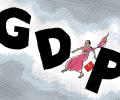
India's economy continues to be robust, but downside risks such as rising crude oil prices, adverse weather conditions, and the global banking crisis outweigh the upside potential in gross domestic product (GDP) growth in the current financial year (FY24), the finance ministry said on Tuesday in its Monthly Economic Review for March. "We reiterate that downside risks to our official forecast of 6.5 per cent for real GDP growth in FY24 dominate upside risks," the review said. "Opec's surprise production cut has seen oil prices rise in April, off their lows of low-seventies per barrel in March.

Auto stocks are weighing on the indices.

With developments like the Russia-China alliance and the rise of China in the Middle East, India's role has diminished though the India-Israel-US-UAE grouping may assume some importance in the future, observes Ambassador T P Sreenivasan.

Equity benchmark Sensex ended marginally higher after a choppy session on Friday as concerns over the economic impact of the second wave of Covid-19 and pace of vaccination weighed on investor sentiment.

Kaizad Bharucha, executive director of HDFC Bank, emerged the highest earning banker for 2021-22 (FY22). This was revealed in a remuneration assessment of the country's top bankers, according to annual reports. Bharucha, who oversees wholesale banking at HDFC Bank, received Rs 10.64 crore remuneration in FY22, mainly due to Rs 4.46 crore as performance bonus. Although earned between 2017-18 and 2020-21 (FY21), the bonus payout was partly paid in FY22.

'But he was very quick and did a very stylish adab.' 'Of course, I didn't expect him to hug.'

Indian Oil Corporation (IOC), the nation's top oil firm, has bought as much as 3 million barrels of crude oil that Russia had offered at steep discount to prevailing international rates, sources said. The purchase, made through a trader, is the first since Russia's February 24 invasion of Ukraine that brought international pressure for isolating Putin administration. Sources aware of the matter said IOC bought Urals crude for May delivery at a discount of $20-25 a barrel to dated Brent.

The ruble has recouped most of its losses and become the top-performing currency globally. It continues to gain and is up 60 per cent against the US dollar from its lows in the first week of March. The ruble appreciated to 83 to the dollar intraday on Tuesday against a record low of 139 on March 7.
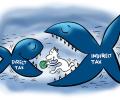
As Centre cedes power to states in indirect tax, it wants to all ystaffers' worry of little work.
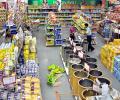
Moody's Investors Service has warned that India, along with the Philippines, Thailand, and Vietnam are highly vulnerable to volatile food and energy prices in the Asia-Pacific region as the Russia-Ukraine conflict continues to disrupt supplies and raise the cost of agricultural products, especially cereals and vegetable oils, as well as fertilizers and other agricultural inputs. This is so because these countries have a higher weighting of energy and food prices in their consumer price index (CPI) baskets, Moody's said in its report released on Tuesday. The weighting of energy and food in overall Indian CPI stands at over 55 per cent.

International Monetary Fund Chief Economist Gita Gopinath tells Indivjal Dhasmana high-frequency indicators for the third quarter of 2021 indicate momentum in economic recovery in India.
Equity markets began the new financial year with smart gains on Friday, with the Sensex rallying over 708 points to recapture the crucial 59,000-mark following gains in index majors HDFC twins and Reliance Industries, along with foreign fund inflows. On the first day of trading in the new financial year, the BSE barometer rallied 708.18 points or 1.21 per cent to settle at 59,276.69. During the day, it jumped 828.11 points or 1.41 per cent to 59,396.62. The broader NSE Nifty advanced 205.70 points or 1.18 per cent to settle at 17,670.45.

The high-level talks took place in the backdrop of indications that India could buy greater volumes of discounted Russian oil and both sides were keen on having a rouble-rupee arrangement for bilateral trade.
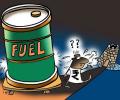
As stringent sanctions imposed by the European Union and US are crippling business and trade, desperate Russian oil companies are offering huge discounts to India, provided a payment mechanism to bypass the SWIFT ban is quickly approved by the government. According to sources familiar with the development, Russian oil firms are offering 25-27 per cent discount to the dated Brent crude prices. State-run Rosneft is one the biggest oil companies that supply crude to India.
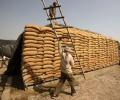
The fall in global prices resulted in a drastic decline in the Food Price Index compiled by the United Nations' Food and Agricultural Organization. Based on the prices of a basket of internationally traded food commodities, the FAO Food Price Index averaged at 203.9 points in July, down 4.4 per cent (2.1 percentage point) from a revised value in June. This level was seen earlier in January, at 203.2 points.

Having exposure to international funds and gold is a must for those who have foreign currency-denominated goals.

Iran is preparing for a trade and investment boom that could reshape the region after agreeing with world powers to curb its nuclear programme, paving the way for sanctions that have stifled its economy to be lifted.

Gold is usually seen as a safe-haven when stocks are falling or when inflation is rising. With prices of the yellow metal hovering near record highs, people are also putting off their jewellery purchases. Along with a subdued marriage season, the orders with price open and settled on delivery day, too, are getting cancelled. Apart from high, volatile prices, there is no gold rush yet for the safe-haven asset, crimping demand.
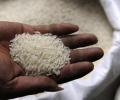
A 6-7 million tonnes shortfall in rice production due to a fall in paddy sowing area is likely to keep rice prices at elevated levels, adding to the inflationary pressure that the slowing economy is already grappling with. Elevated food prices, including that of cereals, had led to retail inflation reversing a three-month declining trend, to touch 7 per cent in August. Similarly, the wholesale price inflation, which declined to 11-month low, also showed price pressures from cereals resulting from wheat output being impacted by severe heat waves in some parts of the country.
